

Kermit Oliver, Hermès, and the Lafayette College Archives Collaboration

(photo courtesy Ms. Hart)
When Hermès decided to honor the Marquis de Lafayette, with a nudge from Tracy Hart, they chose Kermit Oliver, the perfect artist to bring this intricate design to life. Known for his detailed, nature- and myth-inspired creations for the fashion house, Oliver was uniquely suited for the task. The challenge, however, lay in blending his artistic vision with the rich archives of Lafayette College.

(photo courtesy Lafayette College)
Eighteen months after Oliver began his work, the Hermès team arrived in Easton, Pennsylvania, with a carefully guarded gouache original on heavy watercolor paper. It was an incredible feat of artistic compression, capturing an entire lifetime and a nation’s birth on a 90-by-90-centimeter piece of silk.
The Archival Deep Dive
The collaboration was not without its challenges. While Oliver was given artistic freedom, a meticulous fact-checking process began once Hermès presented the design to the Lafayette College library team. Elaine Stomber, the then-assistant college archivist, was tasked with ensuring every detail was as accurate as possible. It took two months of careful checking and re-checking before corrections were sent back to Hermès.

(photo courtesy Lafayette College)
The most obvious correction was the Marquis’s name. Oliver had initially included the name “Marie Paul Joseph Roch Yves Gilbert MOTTIER LA FAYETTE.” This was corrected to the more recognized “Marie Joseph Paul Yves Roch Gilbert MARQUIS DE LAFAYETTE.” Another change was the omission of city names the Marquis had visited, which Oliver had placed around the scarf’s border, likely because they were too small and hence too difficult to print clearly on the silk.

Despite these changes, Oliver’s artistic choices were largely respected. In a 2007 interview with Barbara Mulligan for the Lafayette Alumni News, he said, “I tried to keep the documented colors in terms of the costumes that were worn at the time.” He noted that the scarf’s vibrant red border was a symbolic choice, as “for both America and France red was a very important, symbolic color.” It was the only color printed for the very limited number of scarves issued and available exclusively through the college.
Decoding the Design
Oliver’s scarf is a narrative painting on silk, capturing an entire historical snapshot. The design features key figures and symbols from Lafayette’s life and the American Revolution.

(photo public domain: wikimedia)

At the center are the Marquis and James Armistead Lafayette, a slave who served as an instrumental spy for the Americans against the British. The Marquis later adopted Armistead, who took on his last name. Both figures are inspired by Jean-Baptiste Le Paon’s painting, La Fayette at Yorktown (above).
On the left, George Washington rides his steed, with a 13-starred American flag waving behind him, and a map of the original colonies bridging him and Lafayette.

by John Faed, featuring Blueskin, the horse
(photo public domain: wikimedia)

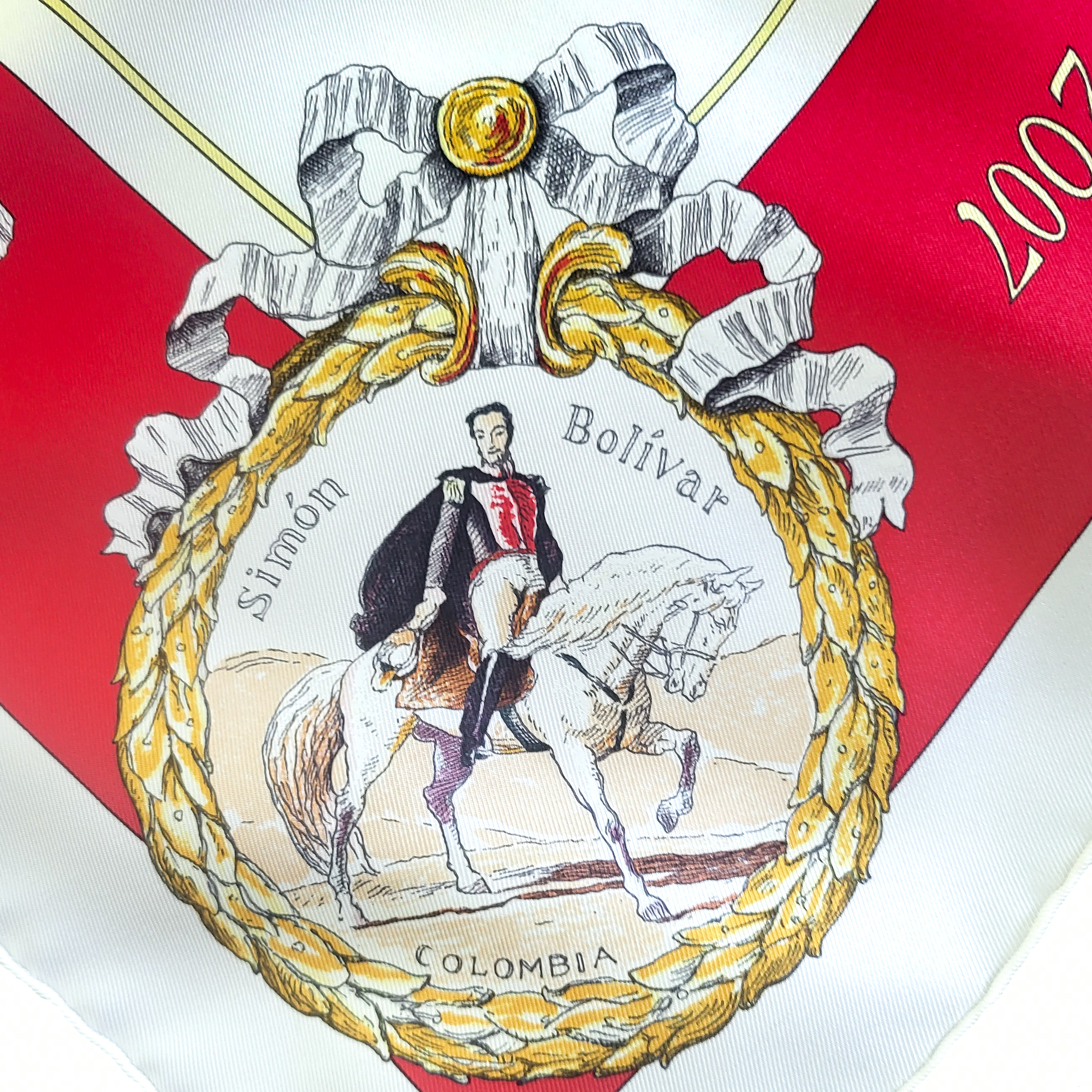

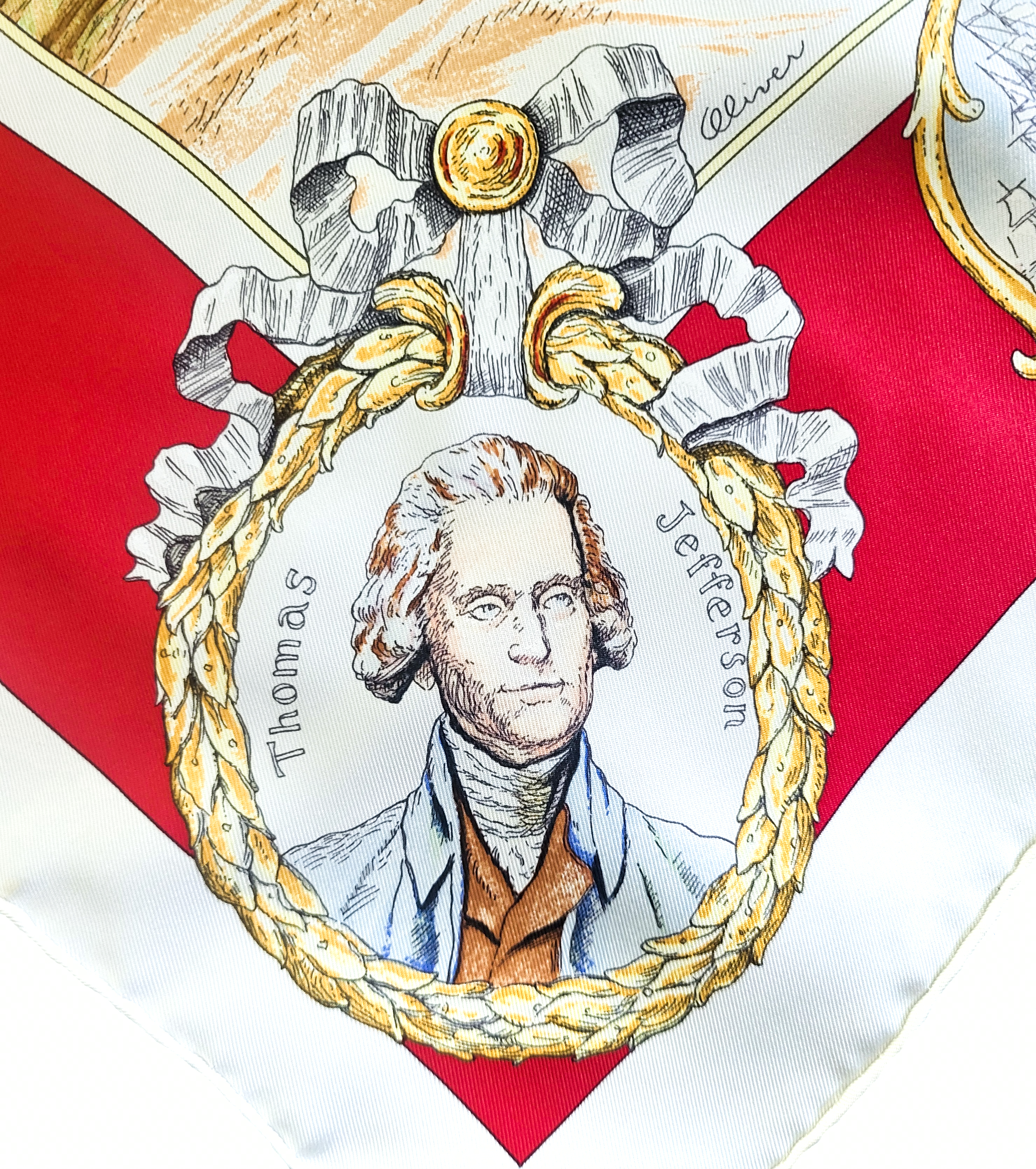
The carré’s red border holds a gallery of historical figures, including Benjamin Franklin, Thomas Jefferson (two bottom corners), and fellow revolutionary, Simon Bolivar, known as the “George Washington of South America”. Toussaint l’Ouverture, a former slave, who led the Haitians in their fight for independence can be found in the corresponding upper corner medallion.

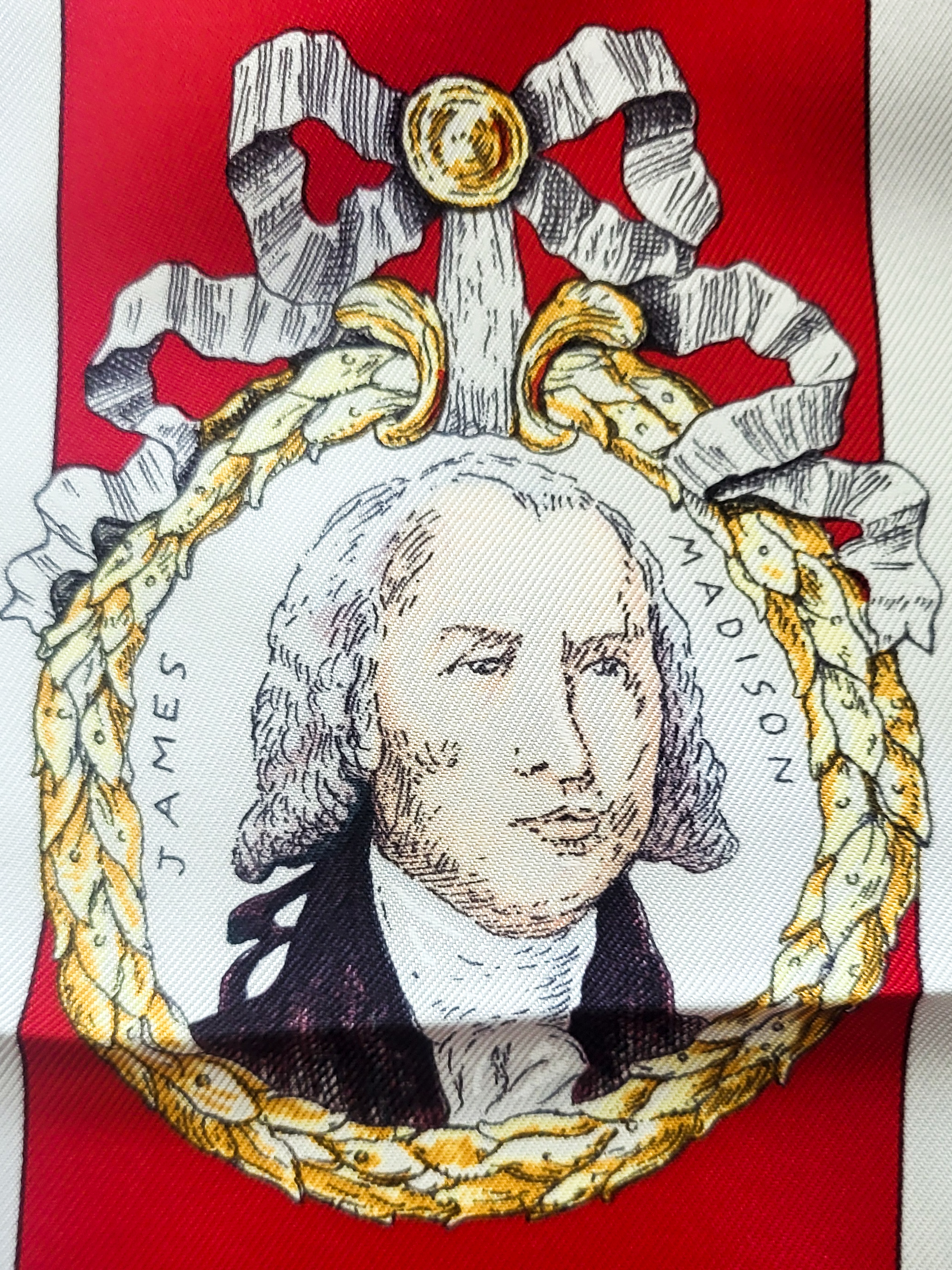
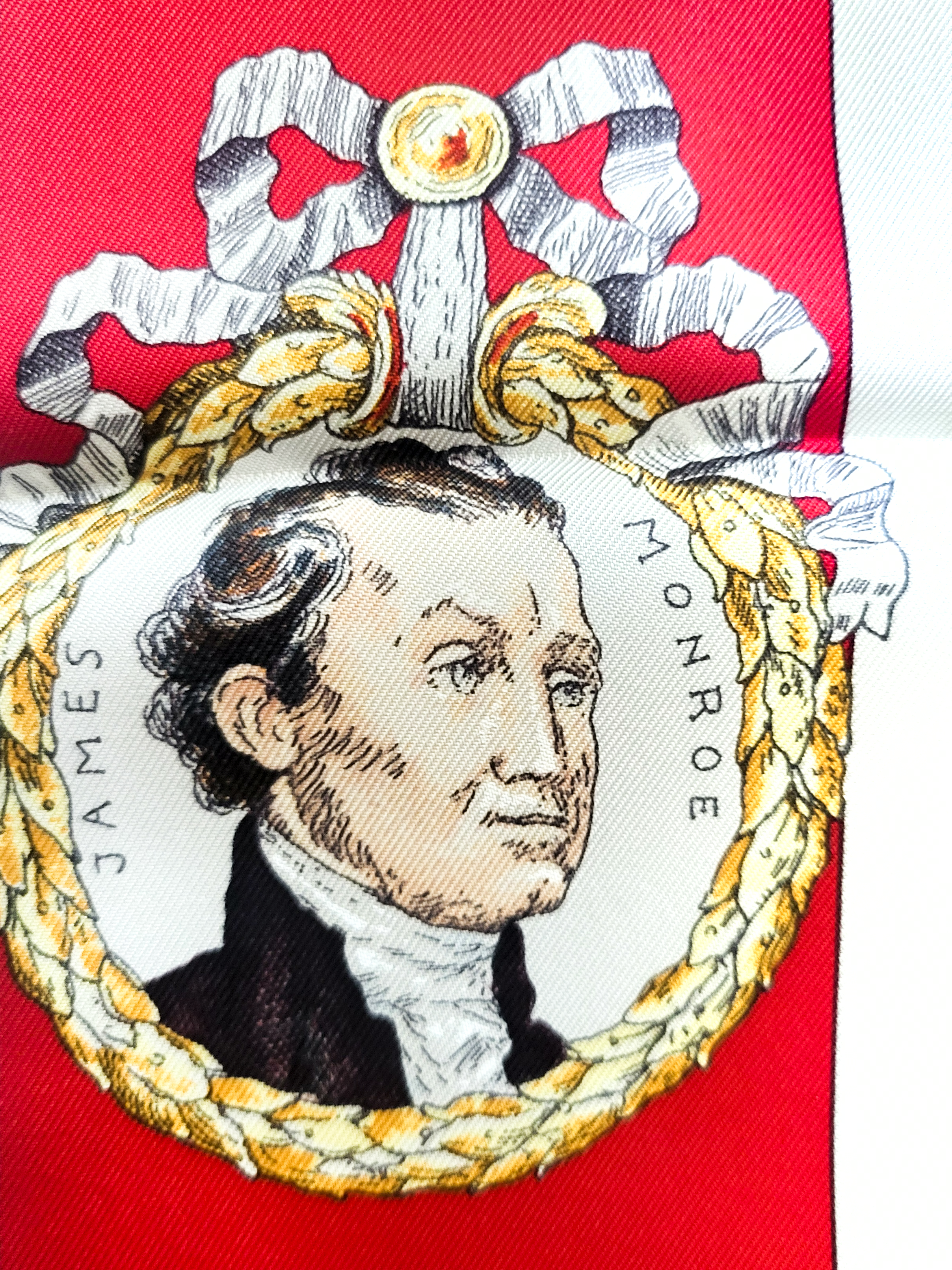
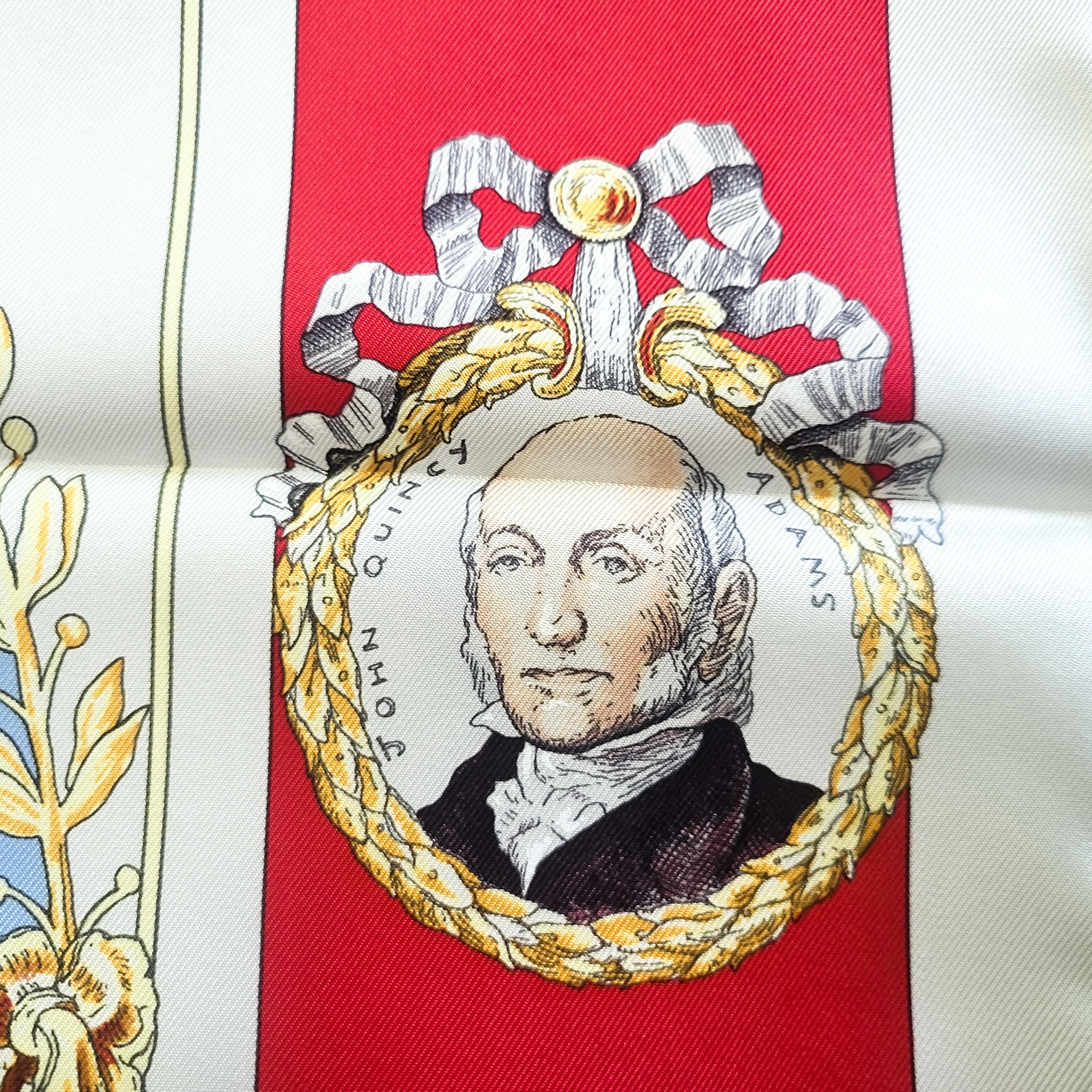
Also featured are John Adams, James Madison, James Monroe, and John Quincy Adams.


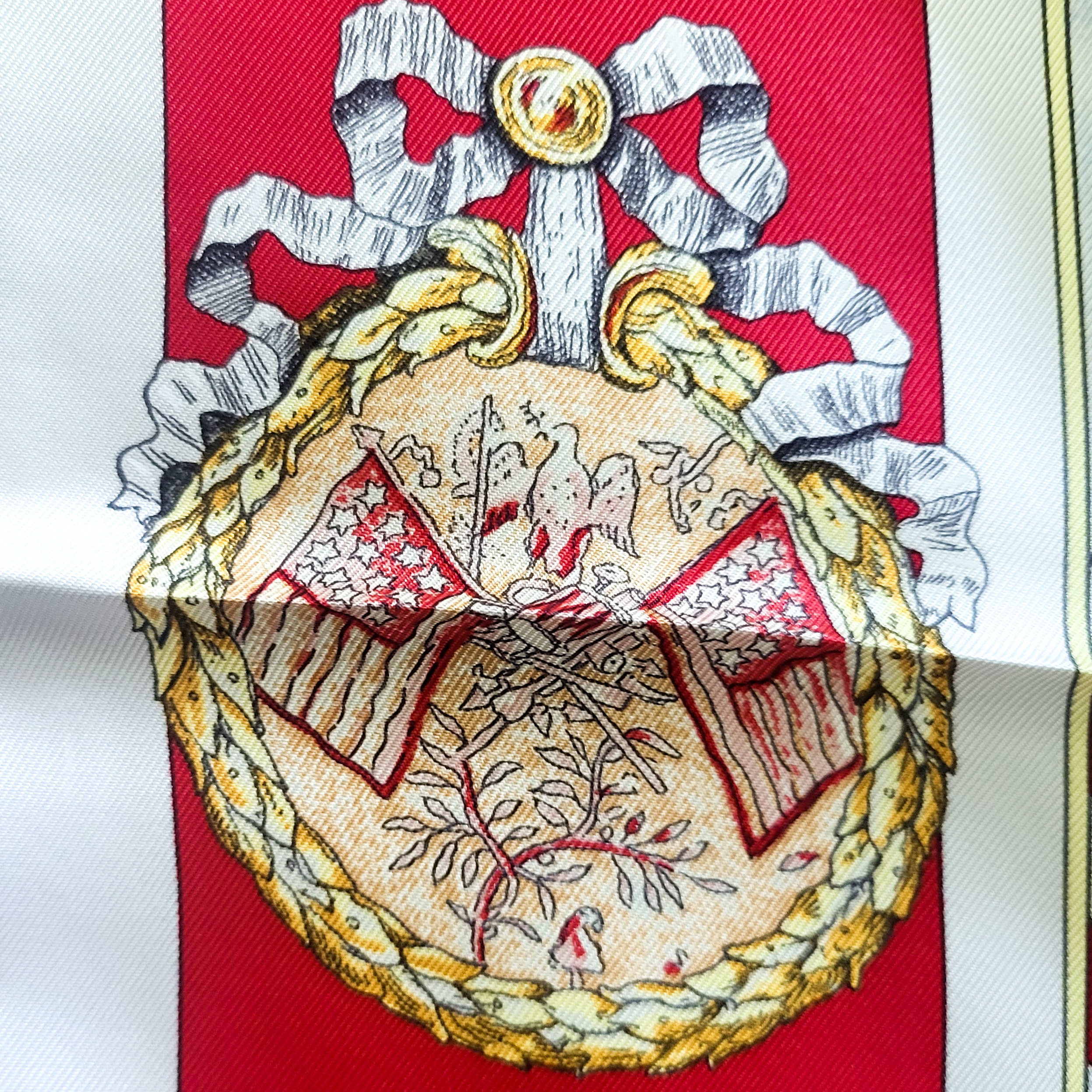
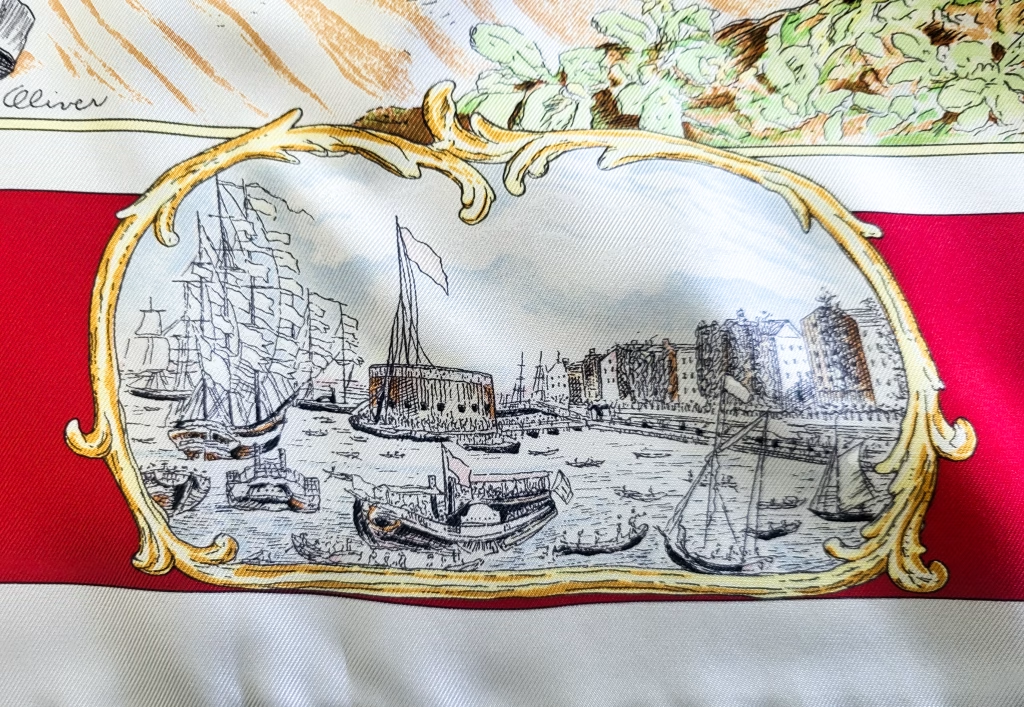
Oliver also creatively included cameos from the “Welcome Lafayette” souvenir scarf that was worn by many during a parade in honor of the Marquis in 1824. The parade was held in Philadelphia, Pennsylvania, during his Farewell Tour of America (1824-1825).

The above etching served as a direct inspiration not just for Oliver’s design, but also several Staffordshire plates, borrowing directly from the college’s archives.
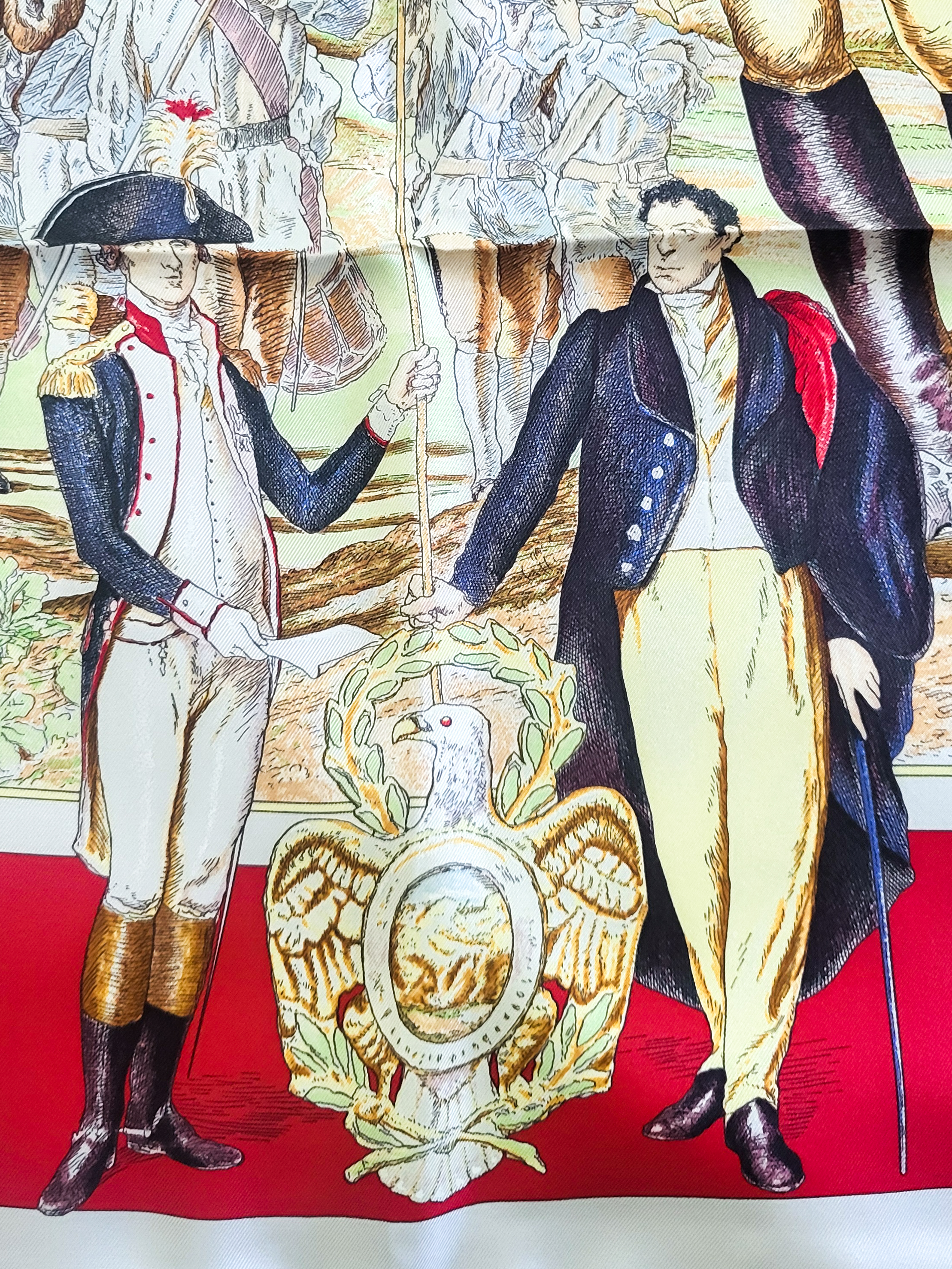

A banner waving above Lafayette and Armistead proudly proclaims France’s national motto: Liberté, égalité, fraternité.

Bringing the story full circle, Oliver, in that same 2007 interview, revealed that the two golden winged figures are borrowed from the War Drawing Room at Versailles. In the original they hover above a large relief of the victorious Sun King on horseback, a subtle nod to the French monarchy and its eventual fall.

Finally, after two months of meticulous review, the approved design was sent back to Paris.
In 2007, the magnificent Marquis de Lafayette Hermès carré with its distinctive red border was issued as a Limited Edition | Special Issue available exclusively at Lafayette College. What began as a longshot idea resulted in a legendary work of art that stands as a testament to the patient collaboration between an American visionary artist, a prestigious French fashion house, and a dedicated team of Pennsylvania’s Lafayette College archivists.
It is a true achievement in persistence and exquisite execution, and a masterpiece for Hermès fans everywhere!
I would like to express my deepest thanks and appreciation to Tracy Hart, Elaine Stomber, and Barbara Mulligan, as well as Lafayette College, for their gracious participation in making this blog post a possibility.
Photos & quotes used with permission, Lafayette College